Albert Einstein Character Traits: 10 Qualities That Made Him a Genius

Most folks think Einstein was born smart, end of story. That idea is easy, but it is also lazy. Real proof from his life shows something else. His mind grew through habits, small daily choices, and a handful of traits he built over decades. This post breaks down those traits, one by one, with facts, tables, and lessons you can actually use.
Quick Note: This piece skips the myths (no, he did not fail math) and sticks to what history and his own letters actually show.
Why Character Mattered More Than IQ
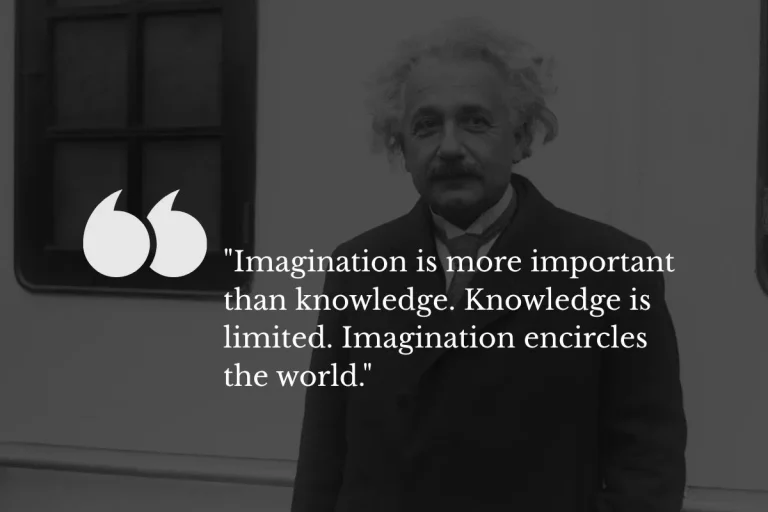
Einstein once said imagination is worth more than knowledge. That single line tells you a lot about how he saw his own mind. He did not see himself as a data machine. He saw himself as a builder of ideas.
Test scores put his IQ near genius level, sure. But plenty of high-IQ people never leave a mark on history. What set him apart was the mix of habits and traits below. Teachers use his story to show kids that grit beats raw talent. Parents use it to teach patience. Self-growth readers use it as a map for their own mindset work.
Here is a fast look at what is coming up:
| # | Trait | Why It Matters |
|---|---|---|
| 1 | Curiosity | Fueled every major idea he had |
| 2 | Persistence | Got him through years of failed drafts |
| 3 | Independent thinking | Let him question old physics rules |
| 4 | Humility | Kept him open to being wrong |
| 5 | Creativity | Turned math into vivid mental pictures |
| 6 | Simplicity | Made his work useful to regular folks |
| 7 | Patience | Helped him sit with hard problems for years |
| 8 | Playfulness | Kept his mind loose and fresh |
| 9 | Moral courage | Let him speak up on hard topics |
| 10 | Lifelong learning | Never let his mind go stale |
1. Curiosity That Never Slowed Down
Einstein was five years old when his dad gave him a small compass. The needle always pointed north no matter how he turned the box. That tiny gift stuck with him for life. He later said that moment made him feel something must lie behind things, something deep and hidden.
That kind of wonder is rare in adults. Most of us stop asking “why” once school ends. Einstein never did. As a grown man with a full-time job at a patent office, he still asked basic questions that most trained scientists had stopped asking, like what would happen if you could ride next to a beam of light.
- He read philosophy books just for fun, not for class credit.
- He kept asking “childish” questions well into his forties.
- He treated wonder as a tool, not a phase kids grow out of.
- He often said the important thing is to never stop asking questions.
Lesson for readers: Curiosity fades when we stop giving it room. Kids ask about 100 questions a day on average, per child psychology studies. Adults ask almost none. Bring back a few “why” questions each week and watch your own thinking sharpen.
2. Persistence Through Years of Failure
People love the “genius” label because it sounds fast and clean. Einstein’s real story was slow and messy.
His theory of general relativity took him close to ten years of drafts, wrong turns, and math errors before it worked. He once wrote to a friend admitting he had spent months on a false path before he found his mistake. That is not the image most people carry of him, but it is the true one.
His first job hunt also flopped hard. He applied to teaching posts across Europe and got turned down again and again. He took a patent clerk job just to pay rent, not because it was his dream. He used those quiet office hours to keep working on physics on the side.
A Quick Timeline of His Struggles
- 1900 to 1902 – Rejected from multiple university teaching posts.
- 1902 – Took a patent office job in Bern out of pure need.
- 1905 to 1915 – Spent over a decade refining relativity theory.
- 1915 – Published general relativity after years of failed math models.
Persistence is not glamorous. It looks like boring, quiet, unseen work. Einstein put in that unseen work for years before the world noticed.
The Myth You Should Drop Today
Warning: The story that Einstein failed math class is false. School records show he scored high marks in physics and math from a young age. This myth spreads fast because it feels comforting, like genius can hide inside a bad report card. But teaching kids a false story does more harm than good. Share facts, not comfort myths.
3. Independent Thinking
Most scientists of his time held tight to Newton’s rules about space and time. Those rules had stood for over 200 years and felt untouchable. Einstein broke from that group thinking and built a fresh model almost alone.
He was not trying to be rebellious for its own sake. He simply followed logic even when it led somewhere strange. When his math kept pointing toward the idea that time bends and speeds up or slows down based on motion, he did not shrink from that result just because it clashed with common sense.
This kind of thinking has a name in psychology circles: cognitive independence, or the ability to hold a view based on evidence rather than social pressure. Solomon Asch’s famous conformity studies later showed how rare this trait really is. In his tests, about one third of people gave a wrong answer just to match the group, even when their own eyes told them otherwise.
Einstein built his career going the other way. He trusted logic and proof over crowd comfort.
Pro Tip: Next time your idea clashes with popular opinion, do not drop it right away. Check the logic first. Popular is not the same as correct.
4. Humility Despite Global Fame
By the 1920s, Einstein was one of the most famous people alive. Crowds mobbed him at train stations. Newspapers ran his face on front pages across the world. Yet those who met him often said he stayed plain, warm, and simple in how he spoke and dressed.
He turned down the offer to become president of Israel in 1952, saying he lacked the natural gift and years of skill needed for such a role. That single choice says a lot. Most public figures chase more power once fame arrives. He walked the other way.
He also stayed open about his own limits. He once admitted that his mind was not that different from anyone else’s, and that he simply stayed with problems longer than most people would. That is a strange thing for a “genius” to say, but it fits his pattern. He gave credit to patience and time, not raw brain power alone.
Fame often makes people defensive about being wrong. Einstein went the other direction. Late in life, he kept revising his own past work when new proof showed he had made mistakes, including changes to his cosmology models after new data came in.
5. Creativity Behind the Math
Here is something school rarely teaches: Einstein thought in pictures first, numbers second.
He called this method a thought experiment. Before he wrote a single equation, he would picture a scene in his mind, like riding alongside a light beam or standing in a falling elevator. These mental movies came before the math that later proved them true.
This blend of art and logic is why some historians place him closer to a creative thinker than a pure number cruncher. He played violin most of his life and often said music helped him think through hard physics problems. When stuck, he would step away from his desk, pick up the violin, and let his mind wander before coming back to the work.
Creativity researchers today call this “incubation,” a break period where the brain works on a problem below conscious level. Studies from cognitive science back this up: stepping away from a hard task often leads to a fresh answer faster than grinding through it nonstop. Einstein used this trick a century before it had a name.
6. A Deep Love for Simplicity
Ask any physics teacher and they will tell you: E=mc² is famous partly because it is short. Einstein had a rule about this. He believed a theory should be as simple as it can be, but no simpler.
That belief shaped how he wrote and spoke. He avoided jargon when he could. He wanted regular people, not just scientists, to grasp his big ideas. This matters more than it sounds. Complex ideas dressed in complex language often hide gaps in the thinking itself. Simple language forces clear thought.
Table below shows how his approach to simple thinking played out across different parts of his life:
| Area | How Simplicity Showed Up |
|---|---|
| Science writing | Short, clear papers instead of dense jargon |
| Public talks | Used plain analogies for tough concepts |
| Daily life | Wore the same style of clothes to reduce small choices |
| Problem solving | Stripped problems down to their core parts first |
Einstein famous quote fits here well: if you cannot explain something simply, you do not understand it well enough. That line alone has guided millions of teachers and writers since.
7. Patience With Hard, Slow Problems
Modern life trains us to want fast answers. Einstein’s biggest wins came from the opposite habit.
General relativity alone took roughly a decade of steady, grinding work. He spent long stretches stuck, revising equations that refused to balance. Friends and letters from that period show real frustration, even moments close to giving up. But he kept circling back.
Patience like this connects to a modern idea called delayed gratification, made famous by the Stanford marshmallow studies in the 1960s and 1970s. Kids who could wait longer for a second treat tended to do better later in life across several measures. Einstein lived that principle at an adult scale, waiting years, not minutes, for his reward.
His patience also shows up in smaller ways. He was known to spend hours on a single walk, turning one problem over and over in his head with no rush to finish. That slow pace felt strange to people around him, yet it produced some of his clearest breakthroughs.
8. Playfulness and a Light Mind
Genius sounds heavy, serious, buried in books. Einstein’s daily life often looked nothing like that picture.
He loved sailing, even though by his own word he was not that skilled at it. He kept a messy desk and joked about it, saying a cluttered desk holds a cluttered mind, then asking what an empty desk would say about a person. He enjoyed silly jokes and made funny faces for photos, including the famous tongue-out picture snapped on his 72nd birthday.
Checklist: Signs of a Playful, Open Mind (Einstein Style)
- Treats mistakes as data, not shame
- Keeps hobbies with zero career payoff
- Laughs at own flaws instead of hiding them
- Stays curious about topics outside main work
- Lets the mind wander without guilt
Play is not the opposite of hard work. In Einstein’s case, play fed his work. Loose, relaxed thinking often opens doors that tight, stressed thinking keeps shut.
9. Moral Courage on Hard Topics
Being smart does not always mean being brave. Einstein was both.
He spoke out against the rise of fascism in Germany during the 1930s, at real risk to his own safety, and left the country once the danger became clear. Later in the United States, he took public stands on civil rights, calling racism a disease and joining efforts against segregation at a time when most public figures of his fame stayed silent on the topic.
He also pushed back against nuclear weapons after helping trigger their creation through his early physics work. That regret shaped his later years, pushing him toward peace efforts and public warnings about arms races.
This trait rarely gets grouped with genius, but it should. Speaking up costs something. Fame, safety, or comfort. Einstein paid that cost more than once.
10. A Lifelong Hunger to Keep Learning
Right up until his death in 1955, Einstein kept working. Papers on his desk that final week still carried half-finished equations. He never treated his big early wins as a finish line.
This habit matters more than people realize. Many high achievers peak young then coast on old fame for decades. Einstein kept building new questions well into his seventies, even after his most famous work sat decades behind him.
His mindset here matches what modern psychologists now call a growth mindset, a term coined by researcher Carol Dweck decades after Einstein died. People with this mindset treat skill as something built through effort, not something fixed at birth. Einstein lived that idea long before it had a name or a research paper behind it.
Key Takeaways
- Genius looked, in his own case, a lot more like stubborn patience than raw natural gift.
- His biggest wins came after years of quiet failure most people never saw.
- Fame did little to change how plain and humble he stayed in daily life.
- Simple language often points to clearer thinking, not a lesser mind.
- Play and rest fed his best work rather than blocking it.
- Speaking up on hard topics cost him something each time, and he did it anyway.
Final Thought
Strip away the wild hair and the tongue-out photo, and what remains is a man who kept asking questions long after most people stop, who sat with failure for years without quitting, and who stayed plain even while the whole world watched him. Einstein once said he had no special talent, only passionate curiosity. Maybe that line holds more truth than his equations ever needed to prove.