
Memory Exercises: 10 Fun Drills That Make Your Brain Hold On
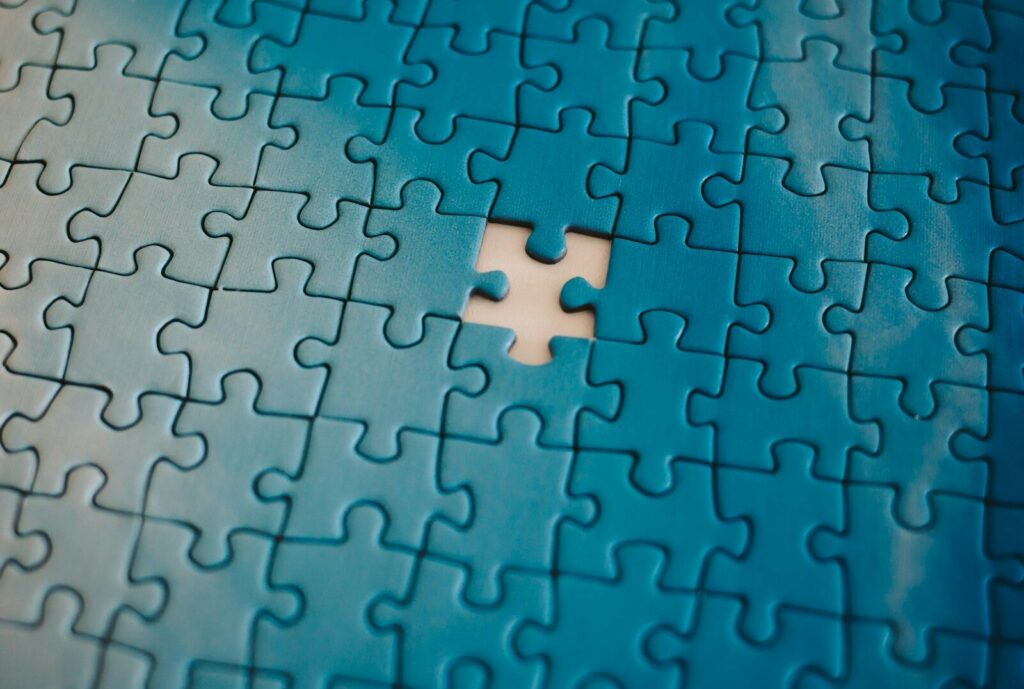
It happens at the shop.
You walk in for four things.
You buy three of them, and you stand in the aisle trying to remember the fourth.
It was on the tip of your tongue a minute ago.
Now it is gone.
These memory exercises are built for that exact moment.
I have stood in that aisle myself, holding a basket and feeling a little foolish.
Most of us know that feeling.
We blame a bad memory.
The truth is kinder than that.
Memory is a skill you can practise, like throwing a ball or learning a tune.
And the best way to practise it is to play with it.
These memory exercises are ten small drills.
Each one takes a few minutes.
Each one gives your memory a clear job to do.
None of them will turn you into a genius.
What they can do is help you hold on to more of what you are learning, one small win at a time.
Here are the ten drills.
Pick one. Try it today.
1) Say the numbers backwards
Ask a friend to read out three numbers, slow and clear.
Say them back in reverse order.
Get it right, and ask for four numbers next time.
Keep adding one number each time you get it right.
When you fail twice at the same length, stop there. That is your score for today.
Most adults can hold about four chunks of information at once when they cannot group items or repeat them under their breath.
That finding comes from a 2001 review by Nelson Cowan, who put the usual range at about three to five chunks.
The drill trains the exact job: hold it, turn it round, and give it back.
2) Play the tray game
Put ten small things on a tray. A key, a spoon, a coin, a pen, a button, a leaf, a stone, a cup, a sock and a book will do.
Look at the tray for thirty seconds. Really look.
Then cover it with a cloth.
Now write down every item you can remember, in any order.
Lift the cloth and check your list.
Swap two or three items for new ones, and play again.
The game works because it gives your eyes a clear job: notice each thing once, and notice it well.
Most people miss two or three items on the first try.
By the third round, the misses shrink.
3) Learn three new names
Names slip away fast because we barely hear them.
Next time you meet new people, pick three names and make them stick.
Hear the name. Say it straight back. “Good to meet you, Sara.”
Use it once more in the next minute of talk.
Then test yourself an hour later. Can you still say all three?
If one is gone, ask again. No shame in it. Asking a second time is how the name gets filed properly.
Three names is the right size: small enough to hold, big enough to stretch you.
4) Replay your day backwards
Each night, before bed, replay your day in reverse.
Start with the last thing you did. Then the thing before that. Then the thing before that.
Work your way back to the morning, one step at a time.
Two minutes is enough.
Going backwards is the whole point. Going forwards is easy, like a song you already know.
Going backwards makes you search. Each step has to be found, not just followed.
You will get stuck. That stuck moment is the workout.
5) Build a silly story chain
Take a short list you need to remember. Milk, bread, eggs and soap, say.
Now link them into one silly story, in order.
The milk floods the kitchen. A loaf of bread sails across the flood on a milk carton. An egg in a tiny raincoat rows the bread to shore. The soap washes the whole crew clean.
Silly is good. Plain is forgettable.
Then put the list away and say the items back, in order, from the story alone.
It is a chain you built yourself, link by link, and chains are easy to pull back up.
6) Learn a short verse by heart
Pick a short poem you like, four to eight lines long.
Read the first line. Cover it. Say it back without looking.
Got it? Add the second line. Say both lines back.
Keep adding one line at a time until you can say the whole verse.
Then leave it alone until tomorrow, and try to say it again.
The first day feels clumsy. By the third day the words start to arrive on their own.
You are laying a path, and walking it until it stays.
7) Play the pairs game
Lay a pack of playing cards face down in neat rows.
Turn over two cards. If they match, keep the pair. If not, turn them back and try to remember where each one was.
Keep going until every pair is found.
Count how many turns it took you.
Then shuffle, lay them out again, and try to beat your count.
This drill trains a different kind of memory: not words, not numbers, but places.
You have to hold a small map in your head: the red seven was third from the left, top row.
The map fades fast at first, and slower with practice.
Play it with a child if you like. Children are often better at it than adults.
8) Draw the route from memory
After a walk or a drive, sit down with a blank page and draw the route from memory.
Mark each turn. Mark the big landmarks. The shop on the corner. The tall tree. The crossing where you waited.
Then check your sketch against the real route.
You will miss a turn. You will put a shop on the wrong side of the road.
That miss is the workout.
Each time you draw, the picture gets a little sharper.
9) Echo the sentence back
Ask a friend to read out a sentence of six words.
Say it back, word for word, in the same order.
Get it right, and ask for a sentence one word longer.
Keep going until you drop a word. That is your score for today.
You can play it alone too. Open a book, read one sentence, cover it, and say it back.
It uses words instead of numbers, and words are harder to hold because each one carries meaning.
Six words feels easy until you try it with no page to peek at.
10) Spot the moved object
Look at a shelf or a table for thirty seconds.
Turn your back.
Ask someone in your house to move one small thing, or to take one thing away.
Turn round. What changed?
This drill trains the part of memory most of us skip: noticing.
Once you start looking for the change, you start seeing the shelf properly.
Swap roles and move something for them.
What these drills will not do
Now the caveat, because every honest list needs one.
Working-memory training improves the trained task.
Two reviews by Monica Melby-Lervag and Charles Hulme make the limit clear. Their 2013 review of 23 studies found reliable short-term gains on the trained working-memory tasks, but no convincing carry-over to verbal or nonverbal ability, reading or arithmetic. Their 2016 update, covering 87 publications, found the same when training was compared with an active control group.
A two-year study by Luc Watrin and colleagues in 2022 found the same. They trained 112 students for two years and found big gains on the practised tasks, but no transfer to fluid or crystallised intelligence.
So keep the promise straight. These drills help you hold on to more of what you are learning. They do not raise your IQ, and they do not grow your memory capacity in general.
That is not a failure. It is what practice is for.
Wrapping up: ten drills, one habit
Ten drills. None of them is hard. None of them costs money.
Pick one. Do it for a week, a few minutes a day, and keep a small note of your best score.
I started with the tray game, and it took less than five minutes a day.
The change will not show up by Friday. It will show up in three weeks, when a short list stays with you and a new name does not slip away.
That slow change is the real kind. It is built, not bought.
Start tonight. Pick a drill. Play it once before bed.