Does Your IQ Change With Age? What Science Really Says

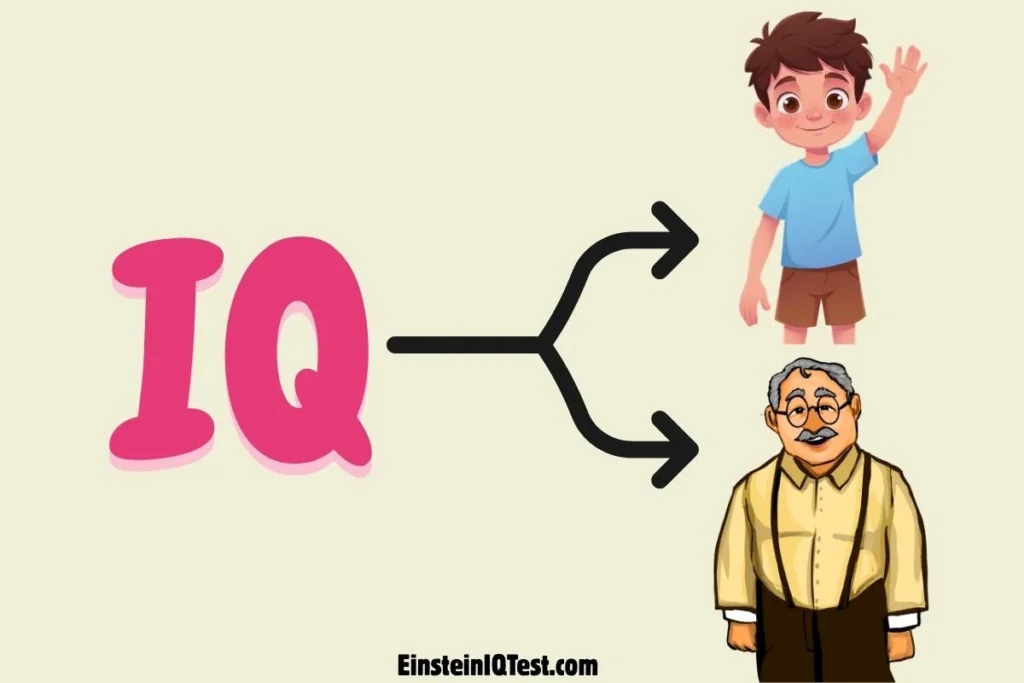
A teenager may solve puzzles faster than their grandparents, but older adults often have stronger vocabulary, better judgment, and more life experience.
So who is actually more intelligent?
This question is exactly why people ask:
Does your IQ change with age?
The answer is more complex than a simple yes or no.
Some mental abilities improve as we grow older, while others slowly become weaker over time. At the same time, your overall IQ score often stays fairly stable compared to people in the same age group.
Understanding why this happens requires looking at how the brain changes throughout life, how intelligence is measured, and what modern research says about cognitive function and aging.
Quick Answer
Here is the short version:
- Yes, some parts of intelligence change with age.
- Certain thinking skills improve over time.
- Other mental abilities may slowly decline.
- Your overall IQ score usually remains relatively stable compared to people your own age.
- Lifestyle, education, health, and environment can also affect cognitive performance.
In other words: Your brain changes throughout life, but your relative standing compared to others in your age range often stays similar.
What Is IQ?
IQ stands for intelligence quotient.
An IQ test is designed to measure certain types of cognitive ability, including:
- logical reasoning,
- memory,
- pattern recognition,
- processing speed,
- verbal understanding,
- problem solving.
A standard intelligence test compares your performance with people in the same different age groups.
For example:
- a 10-year-old is compared with other 10-year-olds not 15, 20 or 40.
- a 40-year-old is compared with other adults in a similar age range.
That is why IQ scores are called “age-normalized.”
IQ Does Not Measure Everything
Many people misunderstand what IQ actually measures.
An IQ test does not fully measure:
- creativity,
- emotional understanding,
- kindness,
- motivation,
- wisdom,
- curiosity,
- social skills.
A person with an average IQ can still become highly successful in business, art, science, relationships, or leadership.
Likewise, a person with a higher IQ may still struggle in other parts of life.
Human intelligence is far more complicated than one number.
Why People Think IQ Changes With Age
As people grow older, they often notice changes in the way they think.
For example:
- younger people may react faster,
- older adults may remember more facts,
- children learn languages quickly,
- adults may solve real-world problems better.
These changes are part of normal cognitive aging.
But this does not automatically mean your overall general intelligence suddenly disappears.
Instead, different mental skills change in different ways.
The Two Main Types of Intelligence
Psychologists often divide intelligence into two major categories:
- Fluid intelligence
- Crystallized intelligence
Understanding these two concepts is the key to understanding how IQ changes across life.
What Is Fluid Intelligence?
Fluid intelligence is the ability to:
- solve new problems,
- think quickly,
- recognize patterns,
- process unfamiliar information,
- react rapidly.
This type of thinking is heavily connected to:
- processing speed,
- working memory,
- mental flexibility.
Fluid intelligence is strongest during:
- late teenage years,
- early adulthood,
- young adulthood.
Many studies suggest it peaks somewhere in the 20s or early 30s.
Examples include:
- solving a brand-new puzzle,
- learning a new game quickly,
- reacting fast during mental tasks,
- spotting patterns under pressure.
Why Fluid Intelligence Changes With Age
As people enter middle age and later life, the brain gradually processes information more slowly.
This is a normal part of brain development and aging.
Scientists believe several factors contribute to this gradual decline, including:
- slower neural communication,
- changes in brain structure,
- reduced processing speed,
- aging-related biological changes.
This does not mean older people are unintelligent.
It simply means some forms of rapid thinking become harder over time.
What Is Crystallized Intelligence?
Crystallized intelligence is very different.
It is based on:
- knowledge,
- vocabulary,
- experience,
- learned skills,
- accumulated understanding.
Unlike fluid intelligence, this type of intelligence often improves with age.
Many older adults continue developing stronger:
- communication skills,
- judgment,
- emotional understanding,
- problem-solving strategies.
Examples include:
- understanding complex conversations,
- using past experiences wisely,
- explaining difficult ideas clearly,
- making thoughtful decisions.
This is why many older adults may think more slowly but still make smarter real-world decisions.
Fluid Intelligence vs Crystallized Intelligence
| Fluid Intelligence | Crystallized Intelligence |
|---|---|
| Solving new problems | Using learned knowledge |
| Fast thinking | Experience-based thinking |
| Peaks younger | Often improves with age |
| Processing speed | Vocabulary and wisdom |
| Mental flexibility | Knowledge and judgment |
This difference explains why someone may feel mentally slower in some situations while still becoming wiser overall.
Does IQ Stay Stable Throughout Life?
Research suggests that overall IQ score stability is fairly common after childhood.
If someone scores above average as a child, they often remain above average compared to peers later in adulthood.
However, this does not mean the brain stays unchanged.
Instead:
- some cognitive abilities improve,
- some weaken,
- others remain stable.
Your ranking compared to people in the same age group often stays similar even while your actual abilities shift over time.
How Intelligence Changes at Different Ages
Childhood
During child development, the brain grows rapidly.
Children develop:
- language,
- memory,
- reasoning,
- attention,
- learning ability.
This period involves major cognitive development.
Teenage Years
The teenage brain continues developing important thinking systems.
Teenagers often improve:
- reasoning,
- memory,
- learning speed,
- problem-solving skills.
However, emotional regulation is still developing during this stage.
Early Adulthood
Many forms of fluid intelligence peak during early adulthood.
This is when:
- reaction speed,
- working memory,
- rapid problem solving
are often strongest.
Middle Age
During middle age, people may process information slightly slower but often gain:
- better judgment,
- stronger vocabulary,
- greater knowledge,
- richer life experience.
This is where crystallized intelligence becomes especially valuable.
Old Age
In old age, some people experience:
- slower memory recall,
- reduced processing speed,
- weaker multitasking ability.
This is part of normal cognitive decline.
However, many older adults still maintain strong:
- reasoning,
- language,
- emotional understanding,
- decision making.
What Research Studies Show
Many research studies on human intelligence suggest that intelligence is not completely fixed.
Researchers have found:
- different cognitive skills age differently,
- education affects cognitive performance,
- environment influences mental development,
- stress and health affect test performance.
Some studies even show that IQ scores in teenagers can change more than expected during development.
Scientists continue studying how genetics, education, environment, and health interact across life.
Can Education Affect IQ?
Education appears to influence certain forms of cognitive ability.
People who regularly:
- read,
- study,
- solve problems,
- learn new skills
often maintain stronger cognitive health later in life.
Learning may help build something called cognitive reserve.
What Is Cognitive Reserve?
Cognitive reserve refers to the brain’s ability to adapt and cope with aging or stress.
People with stronger cognitive reserve may handle aging-related brain changes better.
Activities linked to cognitive reserve include:
- reading,
- social interaction,
- lifelong learning,
- mentally challenging activities,
- education,
- healthy lifestyles.
This does not make someone immune to aging, but it may help support stronger cognitive function over time.
Can Mental Health Affect IQ Test Performance?
Yes.
Your emotional state can strongly affect cognitive performance during testing.
For example:
- stress,
- anxiety,
- depression,
- exhaustion,
- poor sleep
can reduce focus and memory.
This is why someone may perform differently on the same test at different times in life.
Mental health and cognitive performance are closely connected.
Why IQ Scores Sometimes Change
Even though IQ is relatively stable for many people, scores can still change.
Reasons include:
- education,
- health,
- trauma,
- sleep quality,
- practice effects,
- emotional state,
- neurological conditions.
A person may also simply perform better or worse depending on the testing environment.
Can Brain Injuries Affect Intelligence?
Yes.
Serious injuries or diseases affecting the brain can sometimes lead to major changes in:
- memory,
- reasoning,
- attention,
- language ability.
Conditions linked to intelligence decline may include:
- traumatic brain injuries,
- Alzheimer’s disease,
- strokes,
- neurodegenerative diseases.
These conditions can affect both daily functioning and IQ testing results.
What Is Verbal IQ?
Verbal IQ measures language-related abilities, including:
- vocabulary,
- comprehension,
- verbal reasoning,
- understanding spoken information.
Verbal abilities often remain relatively strong with age because they are closely connected to crystallized intelligence.
What Is Non Verbal IQ?
Non verbal IQ measures abilities that rely less on language and more on:
- visual reasoning,
- pattern recognition,
- spatial thinking.
These tasks are often connected more strongly with fluid intelligence.
Are Online IQ Tests Accurate?
Most online IQ tests are made mainly for entertainment.
A professional IQ testing process is much more controlled and standardized.
Real testing is usually administered by trained psychologists using validated methods.
Online tests may still be fun, but they should not define your value or future potential.
Common Myths About IQ
Myth 1: IQ Never Changes
Some aspects of intelligence absolutely change over time.
Different cognitive abilities develop differently across life.
Myth 2: Older Adults Become Unintelligent
Many older adults remain highly capable thinkers with strong reasoning and life experience.
Myth 3: A High IQ Guarantees Success
Success depends on many factors besides intelligence, including:
- discipline,
- emotional skills,
- opportunity,
- communication,
- resilience.
Myth 4: IQ Tests Measure Everything
No single intelligence test can fully measure the complexity of a human mind.
So, Does Your IQ Change With Age?
Yes but not in the simple way most people imagine.
Some mental abilities improve with age.
Others slowly decline over time.
Fluid intelligence often becomes weaker during later adulthood, while crystallized intelligence may continue growing through experience and learning.
Your overall IQ score usually remains relatively stable because it is compared with people in the same age group.
The brain keeps changing throughout life.
You may think slower in some situations but wiser in others.
And that is an important reminder:
Intelligence is not just about speed.
It is also about:
- knowledge,
- judgment,
- adaptability,
- learning,
- and life experience.
No single number can fully define a person’s potential.
References
https://pmc.ncbi.nlm.nih.gov/articles/PMC3149731
https://www.nia.nih.gov/health/cognitive-health-and-older-adults