
Elon Musk’s IQ: 5 Clues That Reveal the Real Number
Search for elon musk iq and the web hands you a neat number.
155. It sits on a hundred pages, stated like a fact.
Here is the truth, before anything else. There is no number to reveal.
Musk has never taken or published an IQ test. No clinician has ever published his results. No school record shows a score. No test paper exists to check.
So where does 155 come from? It traces to a 2015 blog guess, then content farms passed it on until it looked like a fact. A Fox News screenshot gave the same number and cited Sociosite, a site the New York Times critic Amanda Hess called a junk website in April 2025. Newsweek asked Musk for comment in February 2025. It got no reply.
That is the whole chain. No test. No date. No examiner.
So this post will not hand you a score. It will do something more honest.
Here are five real clues from his life. Each one shows a different kind of sharp mind at work.
None of them adds up to a number. That is the point.
1) He taught himself to code at ten
Musk was born in Pretoria, South Africa, on 28 June 1971.
At ten he got his first computer, a Commodore VIC-20.
It came with a manual that taught a coding language called BASIC. The manual was built to take about six months.
He worked through it in about three days.
By twelve he had written a space game called Blastar.
He sold the code to a South African magazine, PC and Office Technology, for about $500. The listing ran in 1984.
Think about what that takes. No teacher. No class. Just a kid, a manual, and a machine.
Self taught skill at that age shows focus, patience, and a love of hard problems.
It does not show a score. It shows a habit. And the habit matters more.
Psychologists have a name for this kind of drive. They call it intrinsic motivation: the push that comes from inside, not from a prize.
I find that more telling than any number.
Ask yourself this. What were you teaching yourself at ten?
2) Two degrees at once, two fields
Musk left South Africa at seventeen. He spent two years at Queen’s University in Canada, then moved to the University of Pennsylvania in 1992.
There he took on two degrees at the same time. Physics, and economics.
Physics trains a mind to break a problem down to first principles. To ask what is true, and build up from there.
Economics trains a mind to weigh trade offs. To ask what a choice costs, and who pays it.
Both degrees were conferred in 1997.
Two hard subjects at once is a heavy load. It shows a mind that can hold two kinds of thinking side by side.
A degree is not a test of raw speed. It is a test of steady work over years.
That is a different clue from the first one. The first showed a spark. This one shows staying power.
And staying power is the part of smart that tests rarely catch.
3) A Stanford place he walked away from
In 1995 Musk won a place in a PhD program at Stanford University, in applied physics and materials science.
His plan was to work on energy storage. Big batteries. The kind of work that could change how cars run.
He lasted about two days.
The internet was taking off. He saw the moment, and he left the safe path to chase it.
He started Zip2 with his brother Kimbal that same year.
Now, be careful with this clue. Leaving a PhD is not proof of genius. Plenty of bright people finish their PhDs, and plenty of people leave for bad reasons.
What it does show is nerve. He gave up a sure thing at one of the best schools on Earth for a bet on himself.
Psychologists call that tolerance for risk. Smart minds weigh a risk. Brave ones take it. Musk did both, fast.
A test score cannot measure nerve. Life does.
4) The scores on paper, read with care
This is the closest thing to hard data we have. Read it with care.
Walter Isaacson, in his 2023 biography, reports that Musk scored 1400 on the SAT. That was on his second try. 670 on words, 730 on maths.
That is a strong score. It sits well above the middle of the pack.
But it is not an IQ score. The SAT is a college entry test. It shares some skills with IQ tests, but it is not the same test.
And the number itself is not even settled. Some blogs give a different total, 1490, with a higher maths score. So even the paper trail has a crack in it.
Turn 1400 into an IQ with a formula and you get a broad band, roughly the mid 130s to the low 140s. Not one number. A range. And a rough one, because the test was taken before the SAT scale was recentered in the mid 1990s.
Then there is the 1989 aptitude test. At seventeen, Musk took a computer aptitude test at the University of Pretoria. He scored A+ in Operating and Programming.
His mother, Maye Musk, shared the letter in March 2021. The letter, dated 17 May 1989, called the results outstanding. She wrote that he had to retake the test, because the examiners had never seen such a high score.
A top mark on a coding aptitude test is real evidence of skill with computers. It is not an IQ test. The two are different tools, built for different jobs.
So the paper trail says this: strong, but not sky high, and full of gaps. Anyone who turns it into a single magic number is guessing.
5) Three hard fields, one working mind
Look at the work, not the number.
Zip2, an online city guide firm, sold to Compaq in 1999 for $307 million. Musk was 27.
X.com, his online bank, merged with Confinity in 2000 and became PayPal. eBay bought PayPal in 2002 for about $1.5 billion.
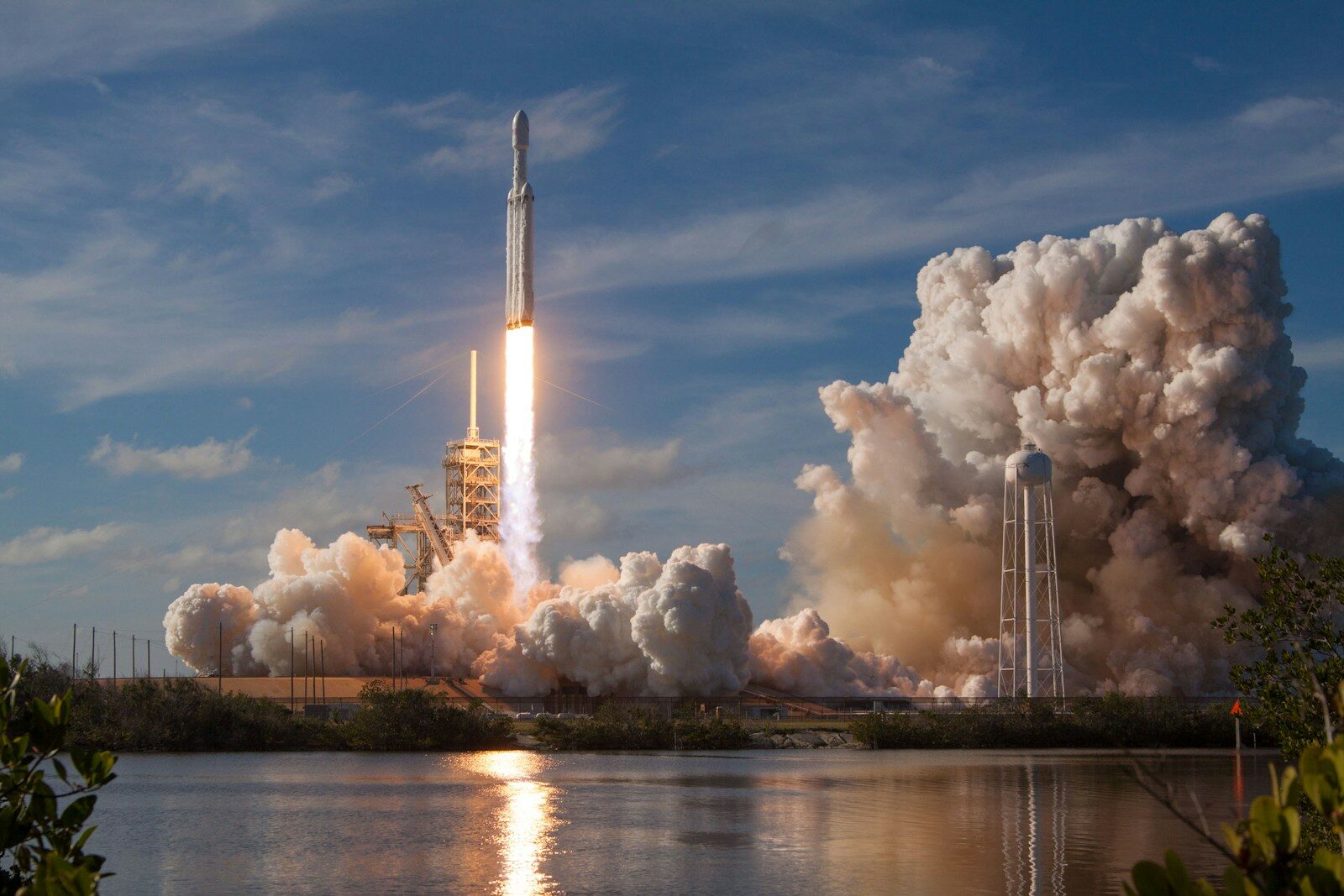
Then he switched fields. He founded SpaceX in 2002, a rocket firm, and put about $100 million of his own money into it.
In 2004 he joined Tesla, a young electric car firm, as an investor and chairman. He became chief executive in 2008.
Payments. Rockets. Cars. Three fields with almost nothing in common, except hard physics and hard maths at the core.
Jumping fields like that shows a mind that learns fast and moves what it learned into a new room.
Psychologists call that transfer: using a skill learned in one place to crack a problem in another.
It also shows grit. The road was rough. SpaceX lost three rockets before the fourth Falcon 1 reached orbit in 2008. He kept going.
A test score cannot measure grit. A record like this can.
What these clues do not prove
Now the caveat, because every honest list needs one.
None of these clues is a score. A degree is not a score. A sale is not a score. A top mark on an aptitude test is not a score.
Success can come from luck, timing, money, and help from other people, as well as from brains. Musk had a good start in some ways, and hard years in others.
High ability in one field does not mean high ability in all fields. A mind can be sharp with rockets and blunt with people.
And a single number, even a real one, would still miss most of what makes a mind work. It would miss nerve, drive, focus, and luck.
So if a page tells you his IQ with total confidence, ask one question. Where is the test? If there is no test, there is no number.
Wrapping up: look at the work, not the number
The search for elon musk iq ends where it started. With no score, and five real clues.
A kid who taught himself to code. Two degrees at once. A PhD place left behind for a bet. Strong but ordinary test scores. A career built across three hard fields.
That is a lot to learn about a mind. More, in truth, than a single number would ever tell you.
The next time a page hands you a neat IQ for a famous name, pause. Ask for the test. Ask for the date. Ask who gave it.
If those answers do not exist, the number is a story, not a fact.
And the real story is always more interesting than the number.