
Practice IQ Test: 15 Warm-Up Questions Before the Real Test
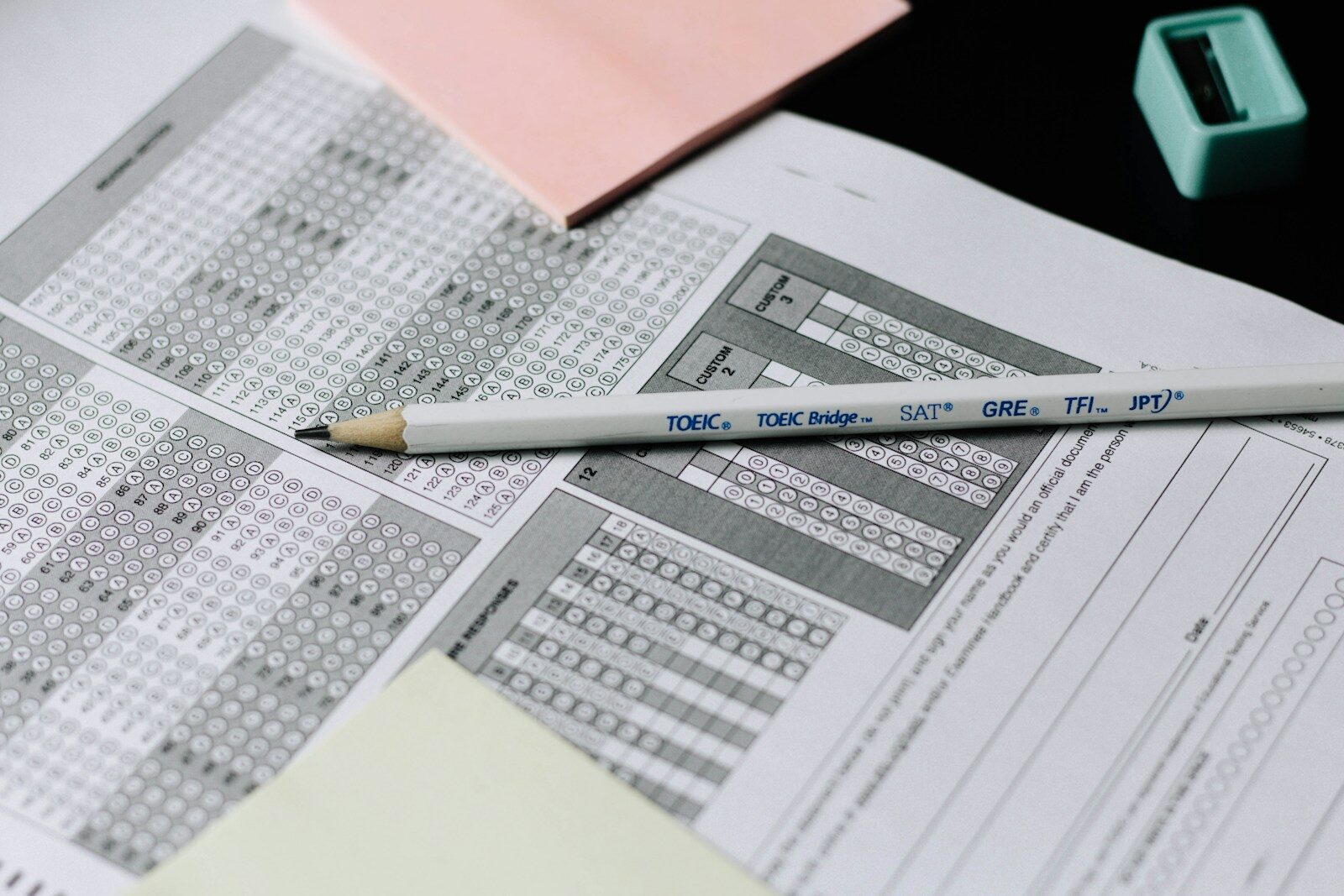
A practice iq test is a warm-up, not a verdict.
You sit down, try a few questions, and learn how the real thing feels.
That is the whole point.
Most people lose points on a first test for a plain reason. Not because they cannot think. Because the format is new, the clock is new, and the question types are new.
Practice helps here. Retaking a similar test usually lifts the score by about 3 to 8 points on the second try. That comes from a 2007 meta-analysis by Hausknecht and colleagues, which put the average gain at about a quarter of a standard deviation.
The gain shrinks fast. It flattens after about the third try. And it comes mostly from knowing the format, the pace and the clock. Not from a rise in general intelligence. Scharfen and colleagues found the same pattern in 2018, and Sala and Gobet reached a similar verdict.
So use these 15 questions the right way. Warm up so your first real attempt measures your thinking, not your unfamiliarity. Never expect a warm-up to raise your IQ.
Psychologists usually wait at least a year before reusing the same professional test. The practice effect is that strong.
These questions start easy and get harder. They cover words, numbers, shapes, memory and speed. Every one comes with an answer and a short reason why.
Try them with a timer if you like. Or take your time.
Here are the 15.
1) Count by twos
What number comes next in this line?
2, 4, 6, 8, ?
Answer: 10.
Each step adds 2. So 8 plus 2 gives 10.
This is a number pattern question. Real tests love them because they check whether you can spot a rule fast. If the rule is clear, trust it and move on.
2) The odd one out
Which word does not belong with the rest?
Apple, banana, grape, carrot.
Answer: carrot.
Apple, banana and grape are all fruit. A carrot is a root vegetable.
This is a verbal question. It tests word sense, not maths. The trick is to find the group first, then spot the one that breaks it.
3) The Red Planet
Which planet is known as the Red Planet?
Answer: Mars.
Mars looks red in the night sky because its soil holds a lot of iron oxide. That is rust, in plain words.
This is a general knowledge question. Tests mix a few of these in with the puzzles. They reward what you already know, and they cost you nothing if you read widely.
4) Double it again
What number comes next in this line?
3, 6, 12, 24, ?
Answer: 48.
Each number is double the one before it. So 24 doubled gives 48.
This one feels like question 1, but the rule is steeper. Many people spot the doubling at the third number and then check it against the fourth. That check is the skill. Never trust a rule from one step alone.
5) Baby animals, grown-up names
Finish the pair.
CAT is to KITTEN as DOG is to ?
Answer: PUPPY.
A kitten is a young cat. A puppy is a young dog.
This is a word analogy. It asks you to find the link in the first pair, then carry the same link to the second pair. The link here is young of the animal.
6) Skip a letter
What letter comes next in this line?
A, C, E, G, ?
Answer: I.
Each step skips one letter of the alphabet. A skips B to reach C. C skips D to reach E. E skips F to reach G. So G skips H to reach I.
Letter patterns work just like number patterns. The rule is the same. Only the symbols change.
7) Say it backwards
Read these four numbers once, then say them backwards in your head.
4, 9, 2, 7.
What is the reversed order?
Answer: 7, 2, 9, 4.
This is a working memory question. You must hold four items in your head while you turn them around. Real tests ask for longer strings, up to seven or eight digits. Four is a gentle start.
If you found this easy, try it again with six numbers. If you found it hard, that is useful news too. Memory for digits is a skill you can train with short daily tries.
8) Faces of a cube
How many flat faces does a cube have?
Answer: 6.
A cube has a top, a bottom, and four sides. That makes six in total.
This is a spatial question. It asks you to picture a solid shape in your head. You cannot count the faces on the page. You have to build the cube in your mind and walk around it.
9) The odd shape out
Which shape does not belong with the rest?
Triangle, square, circle, pentagon.
Answer: circle.
A triangle, a square and a pentagon are all made of straight sides. A circle has no straight side at all. It is the only curved shape in the group.
I like this one because the answer hides in plain sight. Your eye sees four shapes. Your brain has to sort them by a rule, not by looks.
10) Multiply before you add
Work this out in your head.
7 + 8 x 2 = ?
Answer: 23.
Multiply first. 8 times 2 is 16. Then add 7. That gives 23.
The trap is adding first. 7 plus 8 is 15, and 15 times 2 is 30. That feels right and it is wrong. Tests put sums like this in on purpose. They check whether you follow the order of operations under time pressure.
11) Double, then take one
What number comes next in this line?
2, 3, 5, 9, 17, ?
Answer: 33.
Each step doubles the last number and then takes one away. 2 doubled is 4, minus 1 is 3. 3 doubled is 6, minus 1 is 5. 5 doubled is 10, minus 1 is 9. 9 doubled is 18, minus 1 is 17. So 17 doubled is 34, minus 1 is 33.
This is a two-step number pattern. One-step rules are easy to spot. Two-step rules ask you to hold the first step in your head while you test the second. That is why this question sits near the end of the list.
12) Count the letter A
Look at these four words and count every letter A in them.
BANANA, APPLE, AVOCADO, APRICOT.
How many letter As are there in total?
Answer: 7.
BANANA has 3. APPLE has 1. AVOCADO has 2. APRICOT has 1. Add them up: 3 plus 1 plus 2 plus 1 is 7.
This is a processing speed question. The counting is simple. The skill is doing it fast without losing your place. Go slow the first time and get it right. Speed comes later.
13) Sides keep growing
A triangle has 3 sides. A square has 4 sides. A pentagon has 5 sides. A hexagon has 6 sides.
How many sides does a heptagon have?
Answer: 7.
The names count up with the sides. Tri means 3, quad means 4, penta means 5, hexa means 6, and hepta means 7. So a heptagon has 7 sides.
This is a culture-fair style question. It needs no school fact about shapes. You only need the pattern in front of you. Each shape adds one side. The next one must have 7.
14) What sits underneath
Picture a normal dice. The faces on opposite sides always add up to 7.
The top face shows 2. What number is on the bottom face?
Answer: 5.
Opposite faces add to 7, so the bottom face must be 7 minus 2. That is 5.
This is a harder spatial question. You cannot see the bottom face. You have to trust the rule and work backwards. Real tests use the same move with folded paper, turned shapes and hidden sides.
15) The day after tomorrow
The day after tomorrow is Friday.
What day is it today?
Answer: Wednesday.
Work it backwards. If the day after tomorrow is Friday, then tomorrow is Thursday. And if tomorrow is Thursday, today is Wednesday.
This is the hardest question in the set, and it is not about maths at all. It is about holding three days in your head and stepping back through them in the right order. Most people answer Thursday. They count forward instead of back. The trick is to slow down and walk the days one step at a time.
What practice cannot do
Here is the caveat, because every honest warm-up needs one.
These 15 questions will make the real test feel familiar. They will not raise your IQ. The research is clear on that point.
Practice lifts the score you get on a test like the one you practised. It does not lift the general ability underneath. That is why the gains flatten after a few tries. Once the format is familiar, there is nothing left to gain from more of the same questions.
So treat this warm-up as a rehearsal, not a workout for your brain. The value is in knowing what is coming.
Wrapping up: walk in knowing the shape of it
If you take one thing from this list, take this.
A first test is hard mainly because it is new. The questions are strange, the clock is loud, and you spend half your energy working out what the test wants.
These 15 questions take that newness away.
You now know the shapes a test can take. Number lines that double. Words that do not belong. Shapes you must turn in your head. Digits you must hold and reverse.
Walk into the real test with that knowledge. Read each question twice. Trust the rule once you have checked it. And let the score measure your thinking, not your surprise.