
Official IQ Test: 4 Rules a Test Must Pass to Count as Real
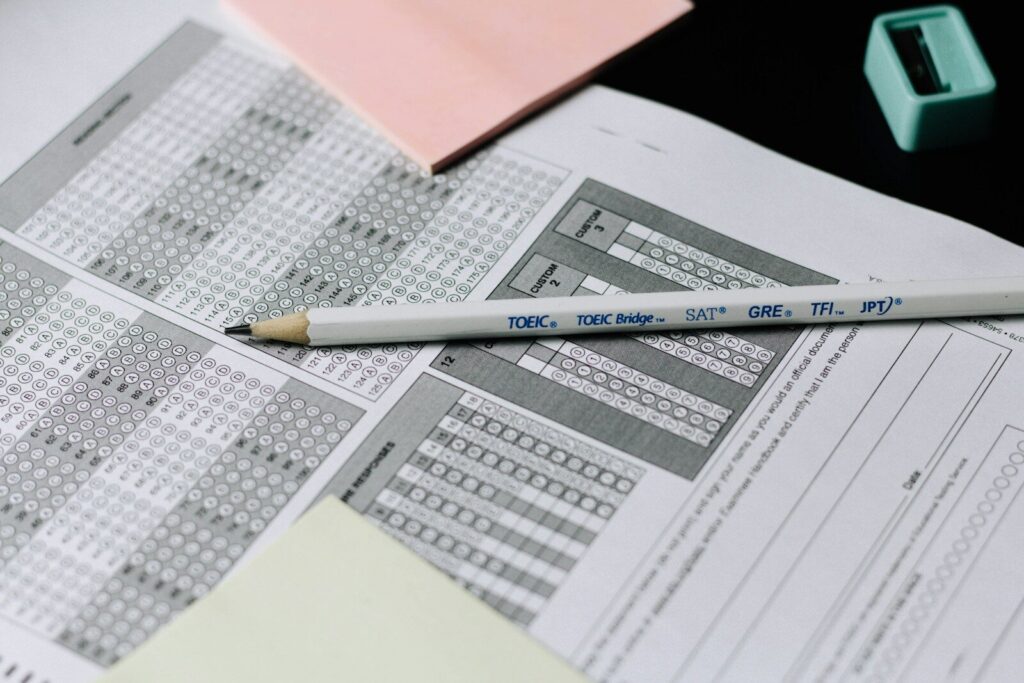
You type “official iq test” into the search box.
The results all sound sure of themselves.
Official. Certified. Real. Approved by experts.
One of them even offers you a certificate, ready to print, before you have answered a single question.
Here is the first thing to know, and it changes the whole search.
There is no single official test.
No government body certifies IQ tests as official. The American Psychological Association issues no seal of approval. No stamp exists to look for.
So what does “official” mean, if nobody hands it out?
It means a test that passes the field’s own published rules. The rules live in one book: the Standards for Educational and Psychological Testing, written jointly by three groups of test experts and last revised in 2014.
Here are the four rules that matter most.
1) Norms from real people
A score on its own means nothing.
Say a test gives you 118. Is that high or low?
You cannot tell until you know how other people did on the same test.
So a real test starts with a crowd.
Test makers give the test to a large group first. Not just any people. A group built with care to look like the people the test is meant for.
That group is called a norm group. Your score is then read against it.
On the usual scale, the middle of that group is set at 100. About two in three people land between 85 and 115.
Now ask the question that sorts real tests from quick quizzes.
Who was in the crowd?
A real test can answer it. It can show you the size of the group, how it was picked, and when it was tested, all printed in a manual for other experts to check.
A quick online quiz cannot answer it. Often there was no crowd at all. The maker picked a number that felt right.
That is the first rule, and it is the easiest to test.
If a test will not tell you who it was tried on, it has not passed rule one.
2) Near the same score twice
Take the same test on two calm days, a few weeks apart.
A good test should give you near the same result both times.
Not exactly the same. Near.
Test makers have a number for this, called test-retest reliability. It runs from zero to one. One would mean a perfect repeat, which never happens.
Well-built tests report figures around 0.90 to 0.95 for the main score. That is high. It is also honest about the gap that stays.
Even the best tests carry a few points of error either way. The standard error is about 3 to 5 points. So a careful score of 100 is best read as roughly 95 to 105.
Read that again, slowly.
The same person, the same test, two good days, can land a few points apart. That is normal. That is the test telling the truth about itself.
Now think about a short online quiz.
You take it once, tired, on a phone. You take it again the next morning, rested, at a desk. The two numbers can sit far apart.
That is not proof that your mind changed overnight. It is proof that the test is noisy.
A real test shows its reliability number in print. It also shows its error band, so you know how wide to read the score.
A test that hides both numbers asks you to trust it blind. Rule two says: do not.
3) It measures what it claims
This is the rule the Standards book puts first.
A test can be steady and still be wrong.
Picture a bathroom scale that always reads five kilos too heavy. It is steady. Step on it ten times and it gives you the same wrong number ten times.
Reliable. Not valid.
Validity asks a plainer question. Does this test measure what it says it measures?
An IQ test claims to measure thinking skill. So the maker must show the work.
That means published studies, not a claim on a sales page.
The studies must show the score lines up with the things it should: school work, other thinking tasks, and learning that needs words and numbers.
They must also show that it does not line up with things it should not: luck, fast typing, or knowing the answers in advance.
And here is the part most sellers skip.
Validity is not one stamp for the whole test. It is tied to one use at a time.
A test can be valid for spotting a child who needs extra help at school, and still not valid for picking staff for a job.
So the honest question is never “is this test valid?”
It is “valid for what, and where is the study?”
A real test answers with a list of studies you can look up. A quick quiz answers with a badge on its home page.
Badges are cheap. Studies are not.
4) One set way to give it
The last rule is about the room, not the questions.
A real test is given one to one, by a trained examiner, under controlled conditions.
Same instructions, same time limits, same quiet room. The examiner watches for tiredness, worry and distraction, and notes them down.
Why does all that care matter?
Because the score is not just about your mind. It is about your mind on that day, in that room, under those rules.
Change the room and you change the score.
A child who slept badly scores lower. A grown man who is rushed scores lower. A woman told to hurry scores lower than the same woman given time to think.
None of that means their minds changed. It means the conditions changed.
The Standards book says this plainly. Scores taken under non-standard conditions must be read with caution and flagged as such.
That is why a test taken alone, at a kitchen table, late at night, with a phone buzzing beside you, cannot carry the same weight as one given by a trained examiner in a quiet room.
The questions may look alike. The conditions are not alike.
What the four rules do not promise
Now the caveat, because every honest list needs one.
A test can pass all four rules and still not tell you who you are.
It can be well built, well normed, steady and valid, and still measure only a slice of thinking: patterns, words, numbers, and holding a few things in your head at once.
It has no column for the things your friends would list first about you.
Your calm in a crisis. Your timing with a joke. The way you can fix a leaking tap by feel, or read a room in four seconds flat.
It also cannot see the day you had. A fever, a row at home, a night with no sleep: all push the score down, and none shrink your mind.
And the rules have a limit of their own.
They judge the test, not the person who reads the result. A sound score in careless hands can still be used badly: to label a child, or to shut a door too soon.
That is why the same book also holds rules about how results must be used, and who may give them.
Passing the four rules makes a test fit for serious use. It does not make the number a verdict.
Wrapping up: ask for the manual
So the next time a site calls its test official, do not look for a stamp.
Ask four short questions instead.
Who was in the norm group? What is the test-retest figure, and how wide is the error band? Where are the published studies, and valid for what use? And how was the test given?
A real test answers all four, in print, in a manual you can check.
A test that passes all four is the kind schools, clinics and courts can use. That is what “official” means in practice: not a seal, but a standard, met in the open.
No unsupervised online test passes all four. Not the quick ones, not the pretty ones.
Not ours, either. The test on this site is a fun sample, a taste of puzzle solving. It is not a clinical result, and it should never be used as one.
I keep that line in mind every time I see a certificate offered for a five minute quiz.
If a test will not show you its manual, it has told you all you need to know.