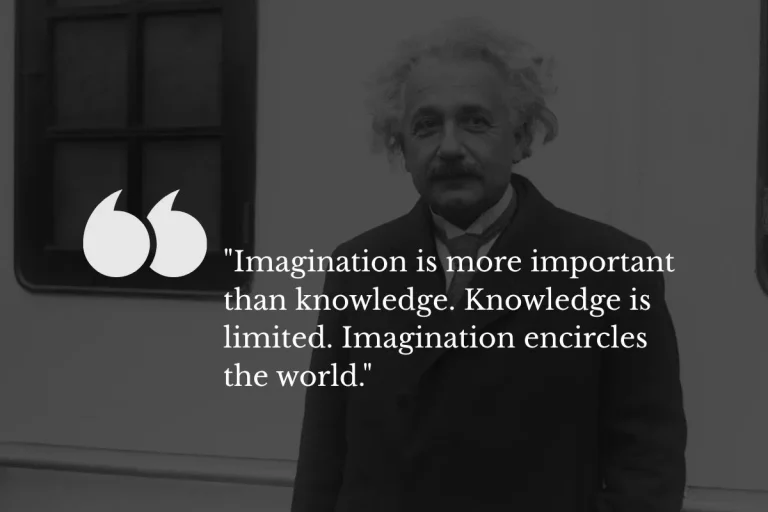
20 Interesting Facts About Albert Einstein

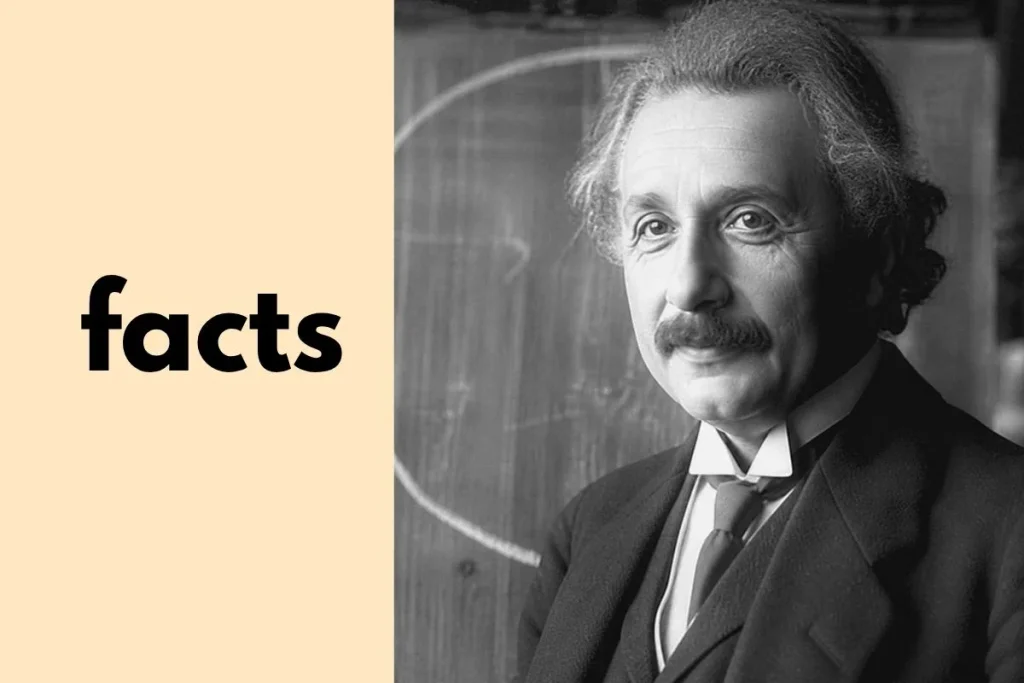
When we think about how little we actually know about the people we quote the most. Einstein is one of those names. We toss it around like a stamp of genius. “He’s an Einstein.” “It’s not rocket science, but it’s not exactly Einstein either.” And yet, ask most people what he actually did, or who he actually was, and the answers get thin fast.
I spent years assuming I knew his story. School had taught me the basics: wild hair, a chalkboard full of equations, a bomb he supposedly built. Most of that, I later found out, was wrong or only half true. The real man was stranger, softer, and far more human than the myth lets on.
So here are twenty facts I’ve gathered, checked, and sat with. Not a trivia dump. A closer look at a man who spent his whole life chasing the same question a five year old asks when he first holds a compass: why does the world work the way it does.
A Quick Snapshot Before We Begin
Full name: Albert Einstein Born: March 14, 1879, in Ulm, Germany Died: April 18, 1955, in Princeton, New Jersey, aged 76 Known for: the theory of relativity and the equation E=mc² Nobel Prize: won in 1921, but not for the reason most people think
Keep that last line in mind. It comes up again soon.
1. A Compass Sparked the Whole Thing
Einstein was five when his dad gave him a compass. Most kids look at a toy like that for a day and lose it in a drawer. Not him. He stared at the needle, moving on its own with no wind or hand to push it, and something in him refused to let it go. Years on, he still spoke of that little brass tool as the first “miracle” of his life. It’s a strange kind of proof that curiosity, left alone and not rushed, can grow into a life’s work. I’ve noticed the same thing in adults who never lost their odd, early fascinations. They tend to be the ones who go furthest.
2. He Fell for the Violin, Slowly
At five, his mom signed him up for violin lessons. He hated it at first. Truly hated it. Then he heard Mozart, and something shifted. He played for the rest of his life, right into old age, not for show but for himself. There’s a quiet lesson buried in that. Some loves don’t arrive on time. They wait until you’re ready, then they stay.
3. He Taught Himself Geometry at Twelve
Long before university, a young Einstein picked up a small geometry book and worked through it alone. He later called it his “holy geometry book,” his second miracle after the compass. No tutor pushed him. No test forced his hand. He just wanted to know how the proofs worked, and he sat with the questions until they gave way.
4. His Teachers Didn’t Rate Him
Here’s a fact that tends to comfort people who feel behind in some way. One of his instructors in Munich told him, flat out, that nothing good would come of his life. He struggled with the school’s rigid rules and left at fifteen. He was strong in math and science, weak in languages, and not the model pupil anyone expected to change the world. If you’ve ever been told you don’t fit the mold, this one’s worth holding onto.
5. His First Scientific Paper Came at Sixteen
At sixteen he wrote an essay asking how magnetic fields act on “ether,” a substance scientists back then thought carried light waves through space. It wasn’t published in any grand journal. It was a young mind testing its own reach. That habit, chasing a question just to see where it leads, never left him.
6. Every University Turned Him Down
After finishing his studies, Einstein applied to teach physics. Every single door shut. No school wanted him. He finally took a job checking patent claims for the Swiss government in Bern. He later called that job “a kind of rescue,” since it gave him steady hours and a quiet mind to think. It’s odd to picture the man behind relativity stamping patent forms, but that’s exactly where his best ideas began to form.
7. 1905 Was His “Year of Miracles”
In one single year, while still working at that patent office, he published four papers that shook physics to its core. One explained the photoelectric effect. One explained Brownian motion, tiny particles jittering in water, and helped prove atoms are real. Two laid the early groundwork for his theory of relativity. Four papers. One year. One clerk with no lab and no title.
8. His Nobel Prize Wasn’t for Relativity
This one surprises almost everyone. In 1921, Einstein won the Nobel Prize in Physics, but not for relativity. He won it for his work on the photoelectric effect, the discovery that light can behave as tiny packets of energy, not just waves. Relativity was too new, too debated, and too hard to test at the time. The Nobel committee played it safe.
9. He Said Space and Time Bend Together
Einstein didn’t invent the idea of space time. A mathematician named Hermann Minkowski proposed it first. But Einstein’s special theory of relativity showed how space and time stretch and shrink to keep the speed of light constant no matter who’s watching. Move fast enough, and time itself begins to crawl.
10. Nothing Can Outrun Light
His equations showed that as any object nears light speed, its mass and energy climb toward infinity. That means no object with mass can ever catch up to light, let alone pass it. The universe, in other words, has a built in speed limit, and nothing gets a pass.
11. He Called His Own Mistake His “Biggest Blunder”
When his equations first hinted the universe might be expanding or shrinking, Einstein got spooked. He didn’t trust the math, so he added a fudge factor called the cosmological constant to force a static, unmoving universe. Years later, astronomer Edwin Hubble proved the universe really is expanding. Einstein reportedly called the whole episode his biggest blunder. Even the sharpest mind alive doubted his own work when it told him something wild. That’s a very human thing to do.
12. He Refused Military Duty and Called Nationalism a “Disease”
At sixteen, he left Germany partly to dodge mandatory army service. Later, during the first world war, he was one of only a handful of German thinkers willing to publicly oppose the war. He once called nationalism “the measles of mankind,” a strange and blunt way to say that group pride, taken too far, spreads like sickness.
13. The Nazis Made Him a Target
His fame turned dangerous once the Nazis rose to power. They burned his books, held rallies against his ideas, and branded his work “Jewish physics.” Death threats followed. In 1933 he fled Germany for good, first to Britain, then to Princeton, where he stayed until his death. He never set foot in Germany again.
14. The FBI Kept Files on Him for Years
His pacifist views and left leaning politics made him a person of interest to the FBI. Over time, agents built a file on him that ran past 1,400 pages. During the Cold War’s most paranoid years, being outspoken and famous was, apparently, enough to earn a folder with your name on it.
15. Israel Once Offered Him the Presidency
In 1952, after the death of Israel’s first president, leaders offered the role to Einstein. He turned it down, citing poor health and, in his own words, a lack of skill “dealing properly with people.” It’s a rare thing, being offered the top job in a nation and saying no because you’d rather keep thinking than lead.
16. He Didn’t Believe in Black Holes
In a twist that still makes physicists smile, Einstein published a paper in 1939 arguing that black holes couldn’t actually exist in nature. The irony is thick here, since it’s his own general theory of relativity that later proved black holes are real. Sometimes the tools we build outlive our own doubts about them.
17. But He Did Believe in Wormholes
In 1935, Einstein and physicist Nathan Rosen proposed that near objects of huge mass, space time might fold in on itself, forming a tunnel between two far apart points. Physicists still call this an Einstein Rosen bridge. Whether such things truly exist is still an open question, but the idea has never stopped fascinating people.
18. He Refused to Wear Socks
A small, human detail I love. Einstein hated how socks always end up with holes, so at some point he simply stopped wearing them. Black holes he doubted. Sock holes he avoided outright. Even a mind built for the cosmos had room for small, stubborn habits.
19. He Loved Sailing but Was Genuinely Bad at It
He owned a small boat and adored being out on the water, but by most accounts he was a poor sailor. His boat capsized often enough that neighbors grew used to rescuing him. It’s a good reminder that loving something and being skilled at it are two very different things, and both are worth keeping.
20. His Brain Was Removed Without Permission
After he died in 1955, a pathologist named Thomas Harvey removed and kept Einstein’s brain during the autopsy, without prior approval. Harvey later got consent from Einstein’s son to study it. Researchers who examined it found extra folding in the gray matter, especially in areas tied to abstract thought. Whether that folding explains his gifts is still debated. Brains are not simple machines with one clear dial marked “genius.”
A Few Bonus Facts, Because One More Rule Never Hurt
His birthday, March 14, is written as 3/14 in the US, which happens to match the first digits of pi. People now celebrate Pi Day and his birthday on the same date, a coincidence he never asked for but would probably have found funny.
He also co-invented a working refrigerator with physicist Leo Szilard. It needed no motor and no coolant, relying instead on boiling butane to pull heat from a sealed space.
Late in life, he wrote to President Franklin D. Roosevelt, warning that Germany might build nuclear weapons. That letter helped push the US to start its own program. He later said, in an interview, that had he known Germany would fail to build a bomb, he would have stayed quiet.
He was also a member of the NAACP and spoke openly against racial segregation in the US, once calling it “a disease of white people” during a speech at a historically Black college.
Why These Facts Matter More Than They Seem
It would be easy to read this list as trivia and move on. But there’s a thread running through all of it. A boy who stared too long at a compass grew into a man who doubted his own equations, refused to wear socks, sailed badly, and still managed to change how we understand time itself. Genius, in his case, wasn’t a clean, tidy gift. It came bundled with doubt, stubbornness, small quirks, and a habit of admitting when he’d gotten something wrong.
I find that oddly steadying. We tend to picture brilliance as smooth and certain. Einstein’s actual life argues the opposite. He second guessed his own theory of the universe. He clung to old ideas longer than he should have, on wormholes, on black holes, on a static cosmos. And he still moved physics forward more than almost anyone in history.
Key Takeaways
- His Nobel Prize came from work on light, not from the theory he’s most remembered for.
- He doubted parts of his own theory, including the very idea of an expanding universe.
- His personal politics, pacifism and civil rights work, mattered as much to him as physics did.
- Small quirks, like refusing socks or sailing badly, sat right alongside world changing ideas.
- Genius, in his case, looked a lot like patience with hard questions, not a flash of instant insight.
Common Questions About Albert Einstein
Did Einstein fail math in school?
No. This is one of the most repeated myths about him. He was strong in math from an early age and had mastered calculus by his mid teens. The myth likely started from a mix up over Swiss and German grading scales.
What was Einstein’s IQ?
He never took a formal IQ test, so any number you see online is a guess, not a fact. Estimates float around 160, but there’s no real record behind them.
Why is he called the father of modern physics?
His work on relativity and light reshaped how scientists understand space, time, gravity, and energy. Much of modern cosmology, GPS technology, and even parts of quantum theory trace back to ideas he set in motion.
Did Einstein help build the atomic bomb?
Not directly. His equation E=mc² explained the theory behind the bomb’s power, and his letter to Roosevelt helped start the US nuclear program, but he never worked on the Manhattan Project itself.
Where did Einstein spend his final years?
He lived in Princeton, New Jersey, from 1933 until his death in 1955, working at the Institute for Advanced Study.
One Last Thought
I keep coming back to something Einstein once said, that the important thing is to never stop questioning. It sounds simple, almost like something stitched on a pillow. But look at his life closely, and you see he actually lived by it. He doubted his own equations. He changed his mind in public. He stayed curious about a compass needle until the day he built a theory of the universe out of that same stubborn wonder.
Maybe that’s the real fact worth keeping, long after the twenty above fade from memory. Not that he was smart. Plenty of people are smart. It’s that he never let a good answer stop him from asking one more question.