
IQ Tests Exposed: 9 Types, and Which Ones Actually Tell the Truth
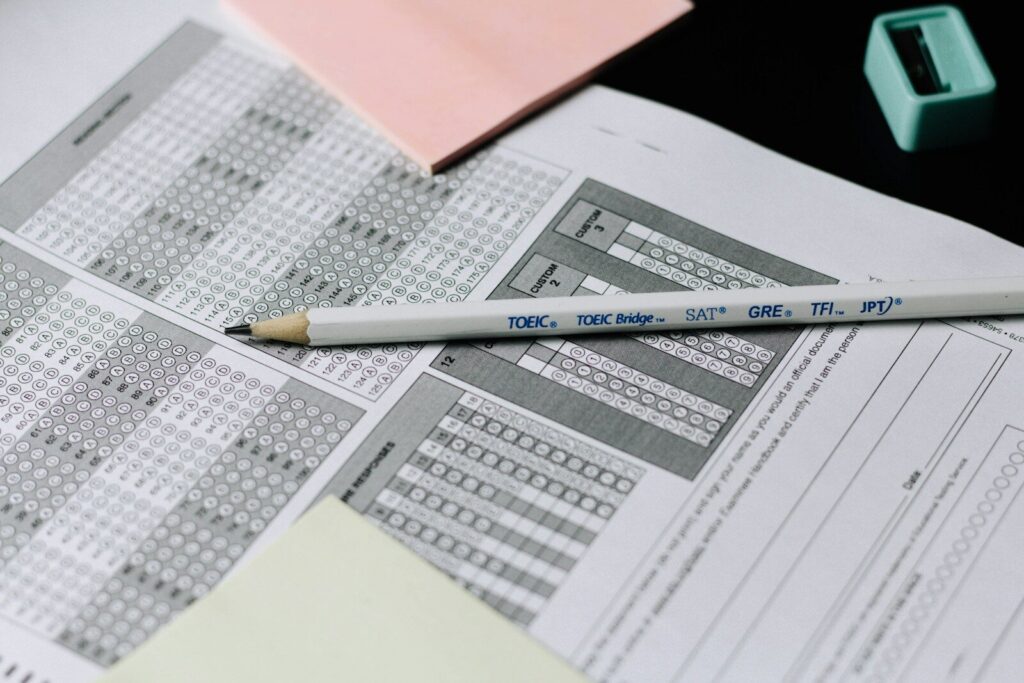
An iq test looks simple from the outside.
You sit down, answer some puzzles, and get a number.
But the number is not one thing. It is a bundle. Inside every full iq test sit different kinds of questions, and each kind tests a different skill.
I have taken a few of these tests over the years, and the mix always surprised me.
Some of them you can trust a lot. Some of them you should hold more lightly.
Here are the 9 types of questions that show up inside most iq tests, what each one really measures, and how much each one tells the truth.
1) Word and verbal reasoning
These are the word questions. Find the word that means the same. Pick the odd one out. Finish the sentence.
They test your word knowledge and how fast you can use it. A wide vocabulary helps a lot here, and so does reading.
The catch is simple. Word skill grows with school and with books. A person who reads a lot will score higher, even if their raw pattern skill is the same as yours.
So this type tells the truth about your word skill. It tells less about your whole mind.
Trust it for what it is. A measure of words, not of worth.
2) Spotting patterns in shapes
Look at a row of shapes. Find the rule. Pick the shape that comes next.
These questions test pattern sense. Your mind has to spot the rule hiding in the shapes, then apply it one step further.
They need no words at all. That is their strength. A person who speaks little English can still do well on them.
They also show one of the purest parts of test skill. Spotting a rule fast is close to the core of what these tests try to catch.
A shape test feels like a game. It is a game with a real point.
Trust this type more than most. It is less tied to school and books than the word questions are.
3) Number and logic puzzles
2, 4, 8, 16. What comes next?
Number questions test your sense of order and logic. You spot a rule in the numbers, then you use it to find the missing one.
They feel like maths, but they are really about pattern sense with numbers instead of shapes.
Speed matters here. The rule is often simple once you see it, and the test is whether you see it fast.
These questions are fair when the maths stays simple. If they need hard sums, they start to test school maths more than thinking.
4) Pictures and shapes in space
Turn this shape in your mind. Which picture shows it from the other side?
Spatial questions test your mind’s eye. You hold a shape in your head, turn it, fold it, and match it to the choices.
This skill shows up in real life more than people think. Reading a map. Packing a bag so everything fits. Picturing how a room will look with the sofa moved.
It is one of the most useful skills a test measures.
Trust it as a fair measure of visual thinking. Just note that practice with puzzles can lift it fast.
5) Holding facts in your head
Read a string of numbers. Now say them back in reverse.
Working memory questions test how much you can hold in your head while you work on it.
This skill sits behind almost everything you do. Following a set of steps. Keeping a phone number in mind while you look for a pen. Adding up a bill in your head. Following a recipe without looking back at the page.
It is also the skill that fades fastest when you are tired or stressed. A bad night of sleep can cut it down for a whole day.
Trust the score, but take it on a good day. A tired mind is not a slow mind.
6) Fast thinking under time pressure
Some questions are easy. The test is how many you can finish before the clock runs out.
Processing speed questions test quick thinking, not deep thinking. They ask for fast, simple answers, again and again.
Quick minds do well here. Careful minds often do not, and that is the flaw in this type.
A careful thinker may solve the hard questions well and still score low, because the clock ran out first.
Trust this type least on its own. Speed is one skill. It is not the whole of smart.
7) What you already know
Who wrote this book? What is the capital of this country? How many days are in a leap year?
General knowledge questions test what you have picked up along the way. School, books, news, talk with friends.
They are the least fair part of most tests. What you know depends a lot on where you grew up and what school you went to.
Two people with the same raw thinking skill can score far apart here, just because one of them had more books at home.
Treat this type as a measure of learning so far, not of ability. It says what you have met, not what you could learn.
8) Tests that skip the words
Some tests drop words on purpose. Shapes, patterns and pictures only.
These are called culture-fair tests. The idea is simple. If the test uses no words, then no one is held back by language or by school.
They work better than word-heavy tests for people from different backgrounds. That is a real gain.
But no test is fully free of culture. The shapes still come from a certain style of thinking, and practice still helps.
Trust these tests more for cross-group comparisons. Just do not call them perfectly fair. Fairer is the honest word.
9) Speed tests versus power tests
Here is the last split, and it matters more than most people know.
A speed test gives you easy questions and a tight clock. A power test gives you hard questions and plenty of time.
Most online tests are speed tests. They have to be. You would not sit still for a two hour test on your phone.
That is the caveat to carry with you. A speed test can hide a deep thinker and flatter a fast guesser.
A full test done by a trained tester mixes both kinds. It also takes about an hour, and it costs money.
So read any quick online score as a rough sketch, not a portrait. It can point you in a direction. It cannot draw the whole picture.
Wrapping up: the test is a toolbox, not a verdict
An iq test is a set of tools, not a single judge.
Each type of question measures one skill. Put together, they give a rough map of how your mind handles test-shaped problems.
The map is useful. It is not the land.
I keep that in mind every time a number shows up on my screen.
Your memory, your patience, your knack for people, your calm under stress: none of these sit inside the 9 types above, and all of them shape a life.
Use the score as a clue. Then put it down, and get on with the work that actually makes a mind sharp.